Medical Applications - UV Sterilization
Short-wavelength ultraviolet C or UV-C offers a chemical-free approach to disinfection. The compact size, high
optical efficiency and eco-friendliness of UV-C LEDs is revolutionizing disinfection—creating new applications that
were not possible with mercury lamps. UV-C LEDs enable applications such as healthcare disinfection, water and air
purification, and surface disinfection of products and consumer appliances.
UV Sterilization Block Diagram
View Product List
This design is for reference only. The design, as well as the products suggested, has not been tested for
compatibility or interoperability.
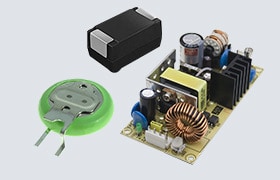
LED AC-DC Driver Module
is a packaged, functional assembly of electronic components that operates as a power source/power supply
that either adjusts to or provides a constant voltage or constant current for the
LEDs
. This is configured to be an AC branch circuit supply on the input and an AC output.
View All Featured AC-DC Supplies
LED AC-DC Driver Module
is a packaged, functional assembly of electronic components that operates as a power source/power supply
that either adjusts to or provides a constant voltage or constant current for the
LEDs
. This is configured to be an AC branch circuit supply on the input and an AC output.
View All Featured AC-DC Supplies
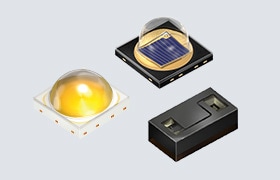
High Power LEDs
are defined as individual components that are greater than 0.20 watts (Voltage, nominal * Current,
nominal).
High Power LEDs have exploded in number over the last decade as new semiconductor technologies have
allowed
higher power densities to be obtained.
High Power LEDs are generally smaller in package size and find applications where traditional lighting
sources will not fit. In addition, LEDs may consume lower power, provide longer lifetime, be more robust
and
can be switched On/Off at very high rates of speed.
Thermal substrates
may be attached to High-Power surface mount LEDs to provide an effective and efficient thermal passage,
which reduces the exposure of the LED to high temperature. A
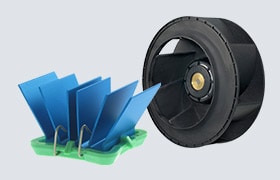
Heat Sink
is a passive component that cools a device by dissipating heat into the surrounding air by transferring
thermal energy from a higher temperature to a lower temperature. By increasing surface area and/or
increasing cool air flow across the surface of the component the level of heat transfer can be improved.
Thermal
adhesives and/or thermal greases may also be used to improve heat sink performance.
Shunt
is a protection device which allows electric current to pass around another point in the circuit when an
LED
element in an LED string fails to an open circuit. This ensures the remaining string of LEDs will continue
to function. There are many cases in which high reliability of the LED lighting must be maintained, such
as
LCD backlighting, transport lighting, avionics, intrinsically safe, and low maintenance lighting.