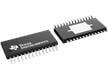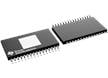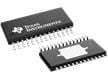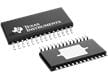


TAS5815PWPR

Texas Instruments
595-TAS5815PWPR
TAS5815PWPR

Nsx:

Mô tả:
Audio Amplifiers 30-W stereo 60-W mo no digital-input hi

Tuổi thọ:
Sản phẩm Mới:
Mới từ nhà sản xuất này.
Mô hình ECAD:
Tải xuống Thư viện Tải miễn phí để chuyển đổi tệp tin này cho Công cụ ECAD của bạn. Tìm hiểu thêm về Mô hình ECAD.

Có hàng: 1,741

Tồn kho:
1,741 Có thể Giao hàng Ngay
Thời gian sản xuất của nhà máy:
12 Tuần Thời gian sản xuất tại nhà máy dự kiến để có số lượng lớn hơn mức hiển thị.
Tối thiểu: 1   Nhiều: 1
Đơn giá:
$-.--
Thành tiền:
$-.--
Dự kiến Thuế quan:

Giá (USD)

Số lượng Đơn giá
Thành tiền
$3.95 $3.95
$2.61 $26.10
$2.38 $59.50
$2.02 $202.00
$1.91 $477.50
$1.72 $860.00
$1.46 $1,460.00
Toàn bộ Cuộn (Đơn hàng theo bội số của 2000)
$1.41 $2,820.00
$1.38 $5,520.00

Đặc tính Sản phẩm Thuộc tính giá trị Chọn thuộc tính
Texas Instruments
Danh mục Sản phẩm: Bộ khuếch đại âm thanh
RoHS:  
Class-D
48 W
0.03 %
HTSSOP-28
4.5 V
26.4 V
- 25 C
+ 85 C
SMD/SMT
TAS5815
Reel
Cut Tape
Băng thông 3 dB: 175 kHz
Nhãn hiệu: Texas Instruments
Bộ công cụ phát triển: TAS5815EVM
Nhạy với độ ẩm: Yes
Sản phẩm: Audio Amplifiers
Loại sản phẩm: Audio Amplifiers
Tắt: Shutdown
Số lượng Kiện Gốc: 2000
Danh mục phụ: Audio ICs
Loại: Class-D Audio Amplifier
Vos - Điện áp bù đầu vào: 6.5 mV
Đã tìm thấy các sản phẩm:
Để hiển thị sản phẩm tương tự, hãy chọn ít nhất một ô
Chọn ít nhất một hộp kiểm ở trên để hiển thị các sản phẩm tương tự trong danh mục này.
Các thuộc tính đã chọn: 0

Chức năng này cần phải bật JavaScript.

CAHTS:
8542330000
USHTS:
8542330001
MXHTS:
8542330299
ECCN:
EAR99

TAS5815 Stereo Class-D Audio Amplifier

Texas Instruments TAS5815 Stereo Class-D Audio Amplifier is a high-efficiency digital input Class-D audio amplifier with an integrated audio processor with up to 96kHz architecture. It includes adaptive modulation schemes based on output power and low RDS(on)= 120mΩ. It also supports the DPEQ process for easy tuning. The DPEQ is used to mix the audio signals through two signal paths (low level and high level). These two paths are used with separate equalization properties. A third path monitors the incoming audio and determines these two parts' thresholds and mixing characteristics. Thus, the mix between the two high- and low-level channels is dynamic and depends on the incoming audio.